

“Thank you for your hard work.”
Drama Profile 🍊
- English Title: When Life Gives You Tangerines
- Literal Title / Dialect: Pokssak Sogatsuda (폭싹 속았수다) — Meaning “Thank you for your hard work” in the Jeju Island dialect.
- Genre: slice of life, family drama
- Network / Platform: Netflix
- Episodes: 16 (Released in four seasonal volumes)
- Director & Writer: Kim Won-seok (Director) | Lim Sang-choon (Screenwriter)
- Main Cast:
- IU (as Oh Ae-sun and daughter Yang Geum-myeong)
- Park Bo-gum (as Yang Gwan-sik)
- Moon So-ri (as middle-aged Oh Ae-sun)
- Park Hae-joon (as middle-aged Yang Gwan-sik)
- Aired Date: March 7, 2025 – March 28, 2025
Synopsis 📜
When life gives you Tangerines is a sweeping generational odyssey that spans decades. It is a profound narrative that uses the shifting seasons to illustrate the passing of time and life phases. This series’ compelling and lovable characters truly make it a timeless series that will resonate with every generation.
The story centers on the beautiful island of Jeju, which is nestled off the coast of mainland South Korea. It is an island with its own unique culture and a prominent community of traditional female free-divers, known as haenyeo (해녀) or “sea women.” Oh Ae-sun, played by three actresses, grows up alongside her mother Jeon Gwang-rye (Yeom Hye-ran) who shines as a gritty and hardworking soul who plunges into the unforgiving sea every day to make a living for her family. Her mother’s unwavering, quiet resilience is a key factor in shaping Ae-sun’s character development, guiding her journey from a girl who wants to escape to Seoul into a woman who becomes an important figure that helps to shape the island community.
The series opens with an elderly Ae-sun in a Jeju nursing home by the sea as the Beatles’ “Yesterday” plays softly—a poignant callback to the 1960s setting and her bittersweet reminiscence of growing up on Jeju Island. Throughout her life, she faces countless tribulations alongside her lifelong partner, Yang Gwan-sik (Park Bo Gum). His enduring dedication and quiet strength serve as a grounding foil to Ae-sun’s free spiritedness and big dreams. From these nostalgic roots, the series unfolds into an expansive, generational chronicle of her extraordinary life on Jeju.
Series Breakdown 🌸
1. The Setting & Atmosphere
The swelling sea, and folk villages of Jeju are a character of its own that serve as the backdrop of the multigenerational and historic narrative. The sea is a turbulent life force that drives the emotional weight of the series. The sea and its cold deep currents are fickle; it can be cold and unsparing but also provide a crucial lifeline to the island.

We see the subtle changes to the island and its people over 60 years through the subtle passing of time and the constant presence of the ruthless sea. The setting mirrors the tight-knit and deeply interconnected fabric of the island community.
2. Character Dynamics & Performances
- Oh Ae-sun (IU / Moon So-ri): IU brings her all into the realm of acting in this series. She captures the essence of youth and free-spiritedness in young adult Ae-sun and her daughter Yang Geum-myeong in the later acts. Her dual role bridges the generational, mother-daughter bond. Moon So-ri embodies a matured, middle-aged progression of Ae-sun’s character development from a starry-eyed young adult to a grounded matriarch.
- Yang Gwan-sik (Park Bo-gum / Park Hae-joon): Park Bo-gum’s portrayal of Gwan-sik and the script underscore a sense of quiet, soft masculinity, showcasing his fierce loyalty to his family. Ultimately, he proves to be a truly versatile performer. Park Hae-joon picks up where left off and seamlessly portrays Gwan-Sik’s enduring kind, hardworking spirit in his middle age.
- Chemistry/Relationship: their bond and lifelong companionship flourishes through the passage of time.
3. Narrative & Thematic Elements
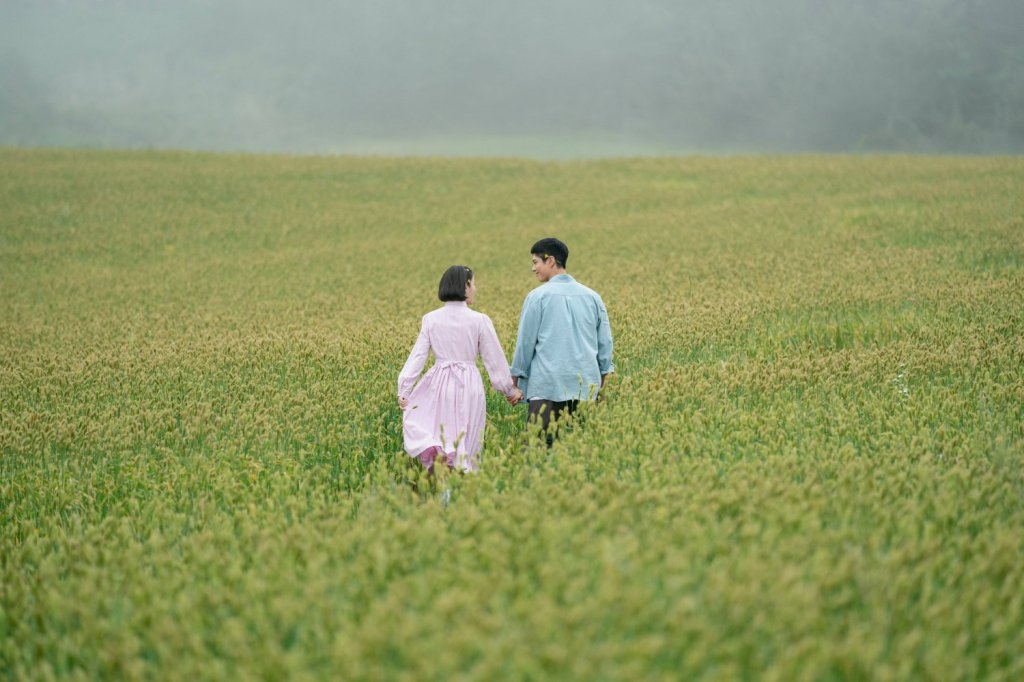
The narrative uniquely unfolds through a four-act seasonal structure of Spring, Summer, Fall, and Winter, each breathing life into the slice-of-life realism as we watch Ae-sun and Gwan-sik journey across the decades.
This deliberately passive, naturally flowing, almost slice-of-life pacing captures a profoundly cinematic and rhythmic style of storytelling. Rather than episodes swinging from plot twists to cliff hangers, the series lingers in the tranquil rhythms of everyday life, letting the changing seasons speak for the characters’ internal growth.
The story centers its characters in a fully fleshed out and historically-resonant world where the atmosphere itself acts as an active character. In a similar vein, South Korea’s rich historical tapestry is the ultimate catalyst, testing the resilience of ordinary people like Ae-sun and Gwan-Sik anchored to an island.
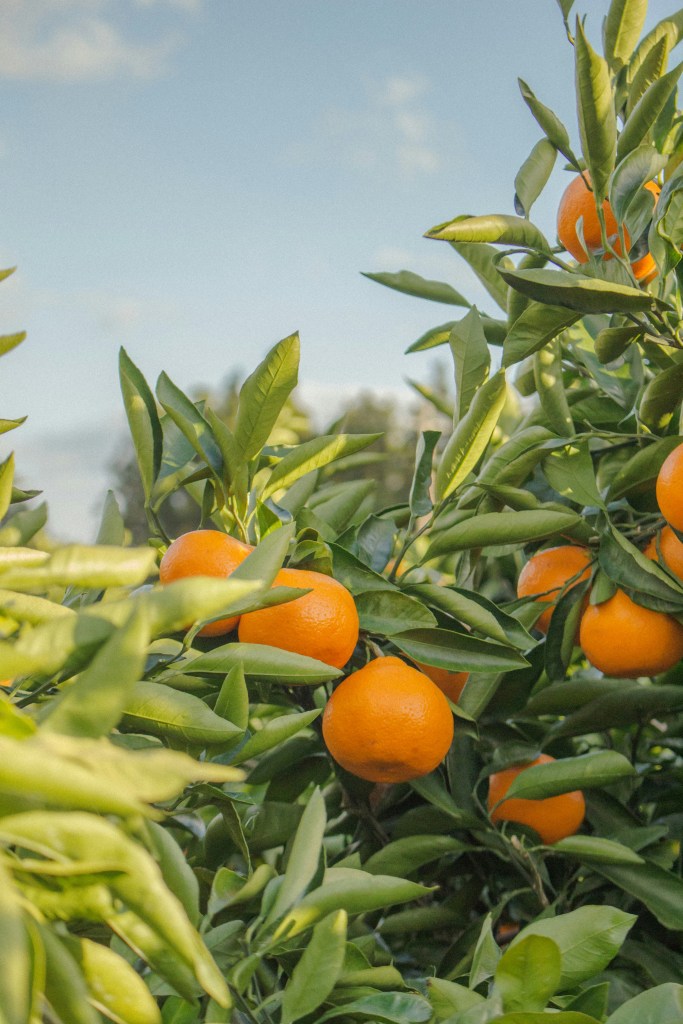
The presence of tangerines, Jeju Island’s iconic fruit, represents the enduring spirit of the island community and speaks to Ae-sun’s family and their resilience amidst rapidly changing Korean history. The title itself pays homage to the island’s annual harvest, illustrating that when life gets hard, one must make the best of the situation and persevere. Ultimately, the phrase translates to “thank you for your hard work,” a mantra that honors the steadfast endurance of the island community and the haenyeo, a distinct quality found in the core cast.
Close-up of tangerines. Photo by Hoyoung Choi on Unsplash
Soundtrack Mentions 🎶
- “Spring” (봄) by Kim Jung-mi (originally released in 1973, written/produced by Shin Joong-hyun) is a melodic, folk piece that serves as the series title sequence that sets the tone for the drama and Ae-sun’s childhood told through the lens of springtime. The sound captures the feeling of fleeting youth and blossoming dreams. It evokes a bittersweet feeling each time the credits roll.
The Final Verdict & Rating
| Category | Score / Impression |
|---|---|
| Plot & Writing | 5 — Lim Sang-choon’s script was well-developed and the dialogue felt authentic. |
| Acting & Chemistry | 5 — IU and Park Bo-gum nailed their roles. IU did amazing balancing acting out two mother and daughter characters. |
| Cinematography | 5 — The cinematography expertly captured the nostalgic feeling of life on Jeju in the 20th century and early 21st century. |
| Rewatch Value | 5 — I would absolutely revisit this series, as the narrative is complex and has so many thought-provoking layers. |
Overall Rating: 5/5
I deeply resonated with this story and cherished the characters as they navigated life’s hardships and tender moments. Even though the characters hail from a time and culture entirely different from my own— the drama’s archtypal take on motherhood, family, and perserverance transcends these differences. This series absolutely deserves to be remembered and stored in the vault for many years to come.
Featured Image Credit: Photo by Hoyoung Choi on Unsplash
Discussion Corner:
- Which version/generation of Ae-sun and Gwan-sik’s story resonated with you the most?
- What surpsrised you the most about the drama? What was your main takeaway?
- Drop your thoughts in the comments below!


Leave a comment